
Industry
Built for Indiana trucking and logistics.
CPA services for Indiana trucking and logistics — owner-operators, small fleets, brokers — covering per diem, IFTA, depreciation, and the S-corp planning that drives owner take-home.
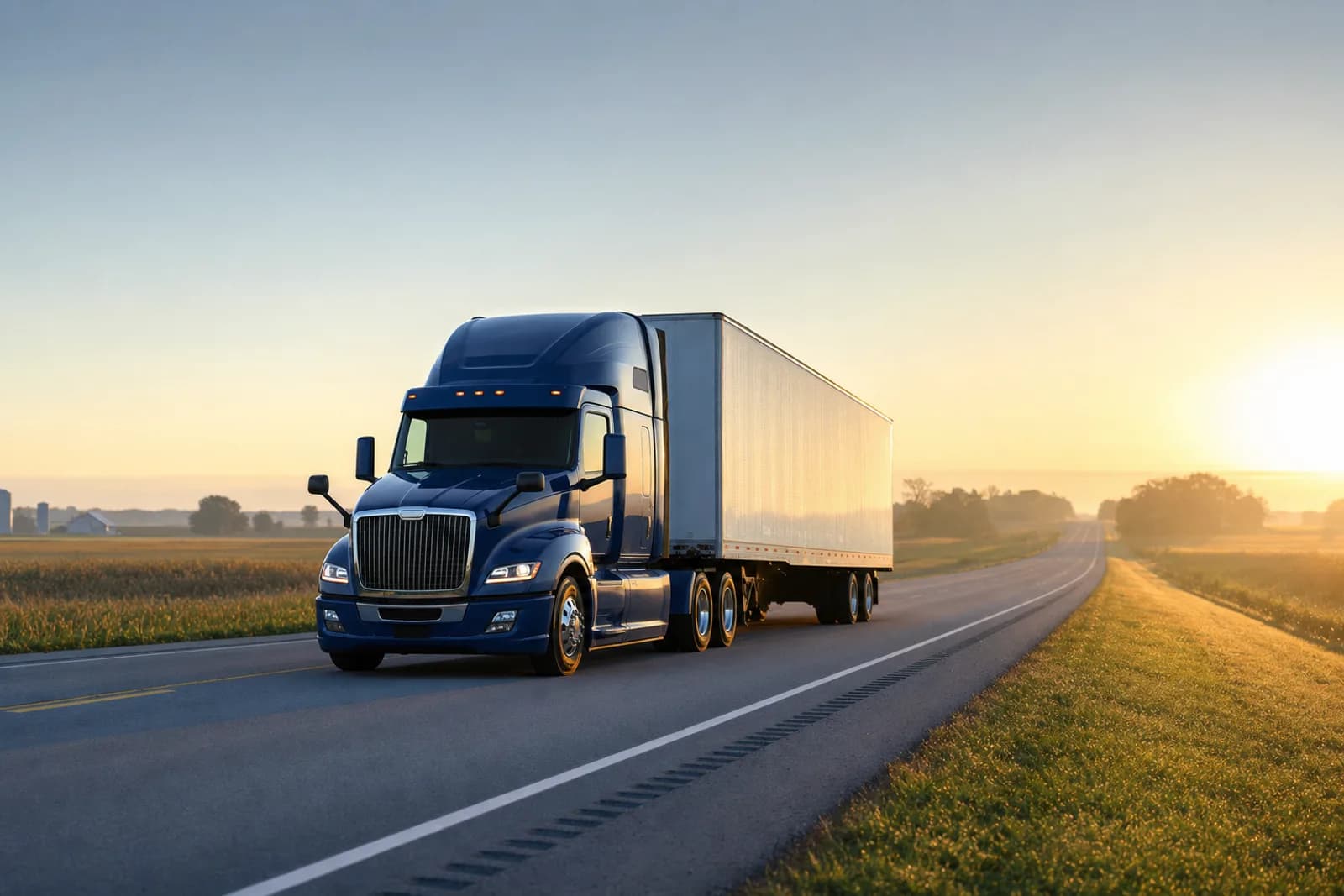
Northeast Indiana sits at the crossroads of US-30, US-24, I-69, and I-469 — a logistics geography that produced 630+ logistics firms and put 23% of the regional workforce in transportation-adjacent jobs. Almost no Fort Wayne CPA firm has a dedicated practice here. We do.
Trucking tax has specifics most generalists miss: per-diem rates, IFTA fuel-tax reporting, heavy-vehicle use tax (HVUT / Form 2290), section 179 ceilings on trucks, owner-operator vs. employed driver structure, and the S-corp math that often turns owner-operator income into materially higher take-home.
Should an owner-operator be an S-corp?
Usually yes, once net income exceeds about $50k. S-corp structure on $100k of profit typically saves $5k–$8k/year in self-employment tax for an owner-operator vs. running as a schedule-C sole prop. We've structured dozens of Indiana owner-operators this way.
Caveats: S-corp adds payroll filings (we handle), reasonable-comp documentation (we handle), and Form 1120-S (we handle). The net is still significant savings for most owner-operators above the threshold.
How do per-diem deductions work for drivers?
Drivers traveling away from home overnight can deduct per-diem for meals and incidentals at the federal rate (currently $80/day in CONUS for transportation workers). For owner-operators, this can be substantial — 200 nights at $80/day = $16,000 deduction (80% deductible portion = $12,800).
Tracking is mandatory — a log of nights away. We set up tracking in your phone or paper log at onboarding.
What's IFTA and how do you handle it?
IFTA (International Fuel Tax Agreement) requires quarterly fuel-tax reporting for trucks operating in multiple states/provinces. Indiana issues IFTA licenses; the quarterly return reconciles fuel purchased per state vs. miles driven per state, with credits or balances due across jurisdictions.
We file IFTA quarterly for fleet clients. Owner-operators can file themselves with our setup support, or include in our package.
Common questions
Logistics & Trucking — questions we get
Do you handle Form 2290 (Heavy Vehicle Use Tax)?
Can you set up an LLC for an owner-operator?
How do you handle 1099 drivers vs. W-2 drivers?
What about section 179 on a truck?
Do you do bookkeeping for fleet owners?
What about freight brokers vs. carriers?
Most relevant services
Where to start
Specialty
S-Corp Specialists
Election, reasonable salary, K-1s, distributions, and year-round planning for Indiana S-corporation owners.
Learn more
Strategic
Strategic Tax Planning
We model the year before it ends. Estimated payments, retirement contributions, entity-level moves, and family income shifting.
Learn more
Foundational
Monthly Bookkeeping
Clean books, on time, every month. Reconciled bank and credit accounts, categorized transactions, financials you can actually read.
Learn more
Next step
Ready to keep more of what you earn?
Talk to a CPA who actually picks up. Quick scoping call, no pressure — we'll tell you straight if we're the right fit.